
How to use a Lick Mat
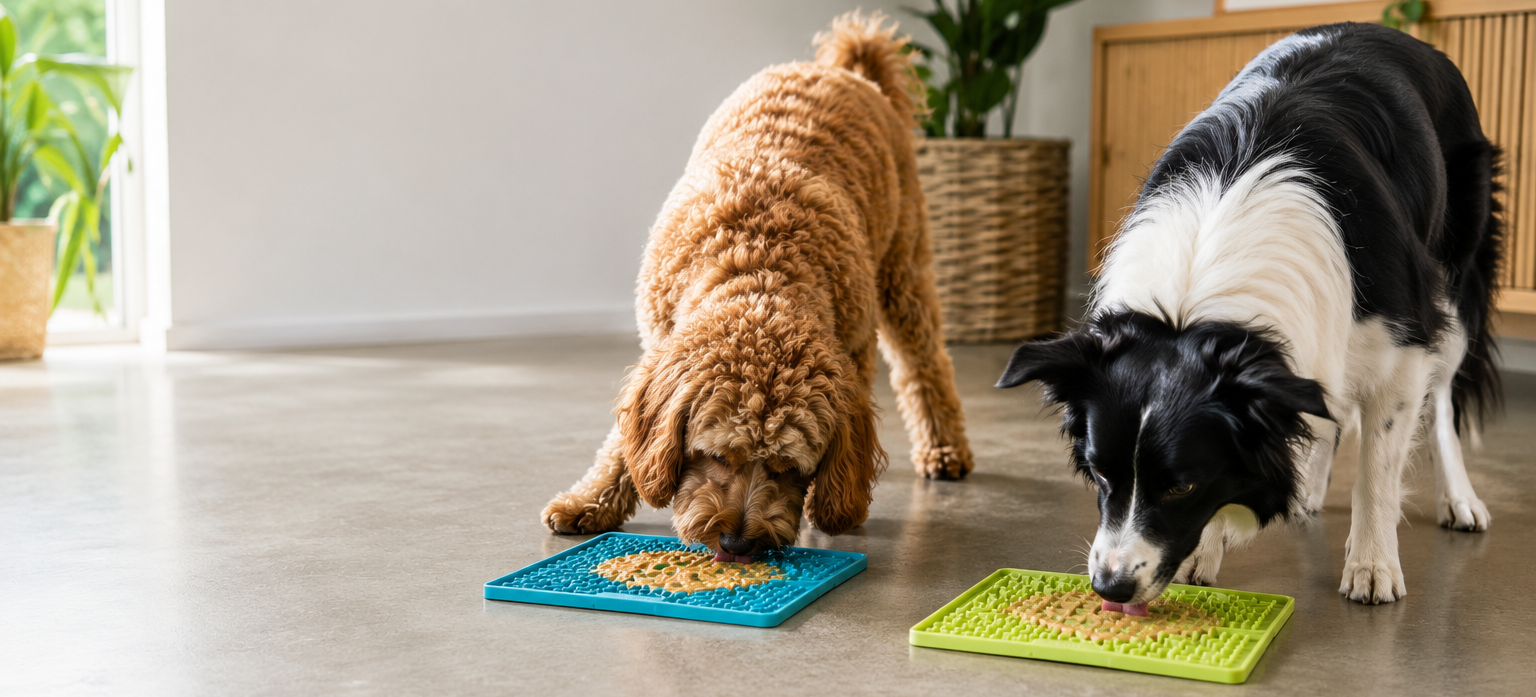
Lick mats have become one of the most popular enrichment toys for dogs, and it’s easy to see why. They provide mental stimulation, encourage slower eating and can help keep your dog calm during situations they might normally find stressful.
Whether you’re introducing one for the first time or looking for new ideas, here’s how to get the most out of your dog’s lick mat.
Why use a lick mat?
Licking is a natural behaviour for dogs. The repetitive action can have a calming effect while also keeping their brain engaged.
A lick mat can help:
Reduce stress and anxiety
Many dogs find licking relaxing. A lick mat can be useful during thunderstorms, fireworks, when visitors come over or simply while you’re away for short periods. The time spent licking helps many dogs stay occupied and settle more easily.
Provide mental enrichment
Instead of finishing a meal in seconds, your dog has to work to lick every last bit from the textured surface. This turns snack time into an engaging activity that helps relieve boredom.
Make grooming easier
Baths, nail trimming, brushing and veterinary checks can all be less stressful when your dog is focused on something tasty. Simply stick the lick mat to a smooth surface and let your dog enjoy their treat while you get the job done.
Help with training
Lick mats can be a great reward during crate training, introducing new environments or helping your dog build positive associations with car travel or time spent in their kennel.
Slow down fast eaters
Dogs that gulp their food can benefit from eating more slowly. Spreading food over a lick mat encourages smaller mouthfuls and extends mealtime without adding extra food.
Support dental health
Licking increases saliva production, which helps wash food particles from the mouth and supports healthy teeth and gums. While a lick mat won’t replace regular dental care, it can be a useful addition to your dog’s routine.
What can you put on a lick mat?
There are plenty of healthy, dog friendly options to try.
Some favourites include:
- Wet dog food or treats
- Prime100 SPD Rolls
- Prime100 Slow Cooked Food
- Raw BARF diets
- Raw minced meat
- Canned sardines in springwater
- Plain Greek yoghurt
- Cottage cheese
- Mashed banana
- Pumpkin puree
- Vegetable purees
- Bone broth (great frozen)
- Natural peanut butter (make sure it does not contain xylitol, which is toxic to dogs)
- KONG Easy Treat Spread
For extra variety, sprinkle a small amount of your dog’s regular dry food over the wet ingredients before serving.
Freeze it for longer lasting fun
Want to make the challenge last even longer?
Simply spread your chosen ingredients over the mat and place it in the freezer for a few hours. Frozen lick mats are especially popular during summer and can keep dogs occupied for much longer than fresh food alone.
A few safety tips
To keep your dog safe and get the best from their lick mat:
- Always supervise dogs that are new to using a lick mat, particularly puppies or dogs that like to chew.
- Choose foods that suit your dog’s age and dietary needs.
- Wash the mat thoroughly after each use to prevent bacteria from building up.
- Replace the mat if it becomes damaged or starts breaking apart
A simple way to enrich your dog’s day
Lick mats are an easy and affordable way to provide enrichment while making everyday activities more enjoyable. Whether you’re slowing down mealtime, keeping your dog entertained or helping them stay calm during grooming, they’re a simple addition that can make a big difference.
Visit your local Better Pets and Gardens store to explore our range of lick mats and healthy treats, and chat with our friendly team about the best options for your dog.
Pet Care
- Dogs & Puppies
- Puppy Care
- Training and Socialising
- How Can a Dog Backpack Help with Behaviour?
- When and How to use a Dog Head Halter
- How to use a Dog Muzzle
- Great Crate Games
- Keeping Dogs Entertained with a Clam Shell
- Can Cats and Dogs be Friends?
- Fireworks and Storms
- Socialising Dogs
- Safe Dogs, Safe Kids
- Mat Training for Dogs
- A Mounting Problem
- Crate Training
- Separation Anxiety
- Dogs at the Beach
- Guide Dog Etiquette
- How to Stop your Dog from Pulling
- Dog Accessories
- Food and Diet
- Grooming and Bathing
- Health and First Aid
- Pet Poison
- Pet Emergencies and First Aid
- Dealing with Snake Bites
- Toxic Plants for Pets
- Heatstroke in Dogs
- Allergies in Cats and Dogs
- Dog Dental Care
- Removing Ticks from Pets
- Treating Ticks and Fleas
- Caring for a Blind Dog
- Pet Insurance
- Visiting the Vet
- Keeping Cats and Dogs Cool in Summer
- Keeping Pets Warm in Winter
- Treating Parasites & Diseases in Dogs
- Caring for Senior Dogs
- How to help a dog with sore Joints
- How to be an Environmentally Friendly Pet Owner
- Holidays and Travel
- Cats & Kittens
- Birds & Poultry
- Small Animals
- Dogs & Puppies


